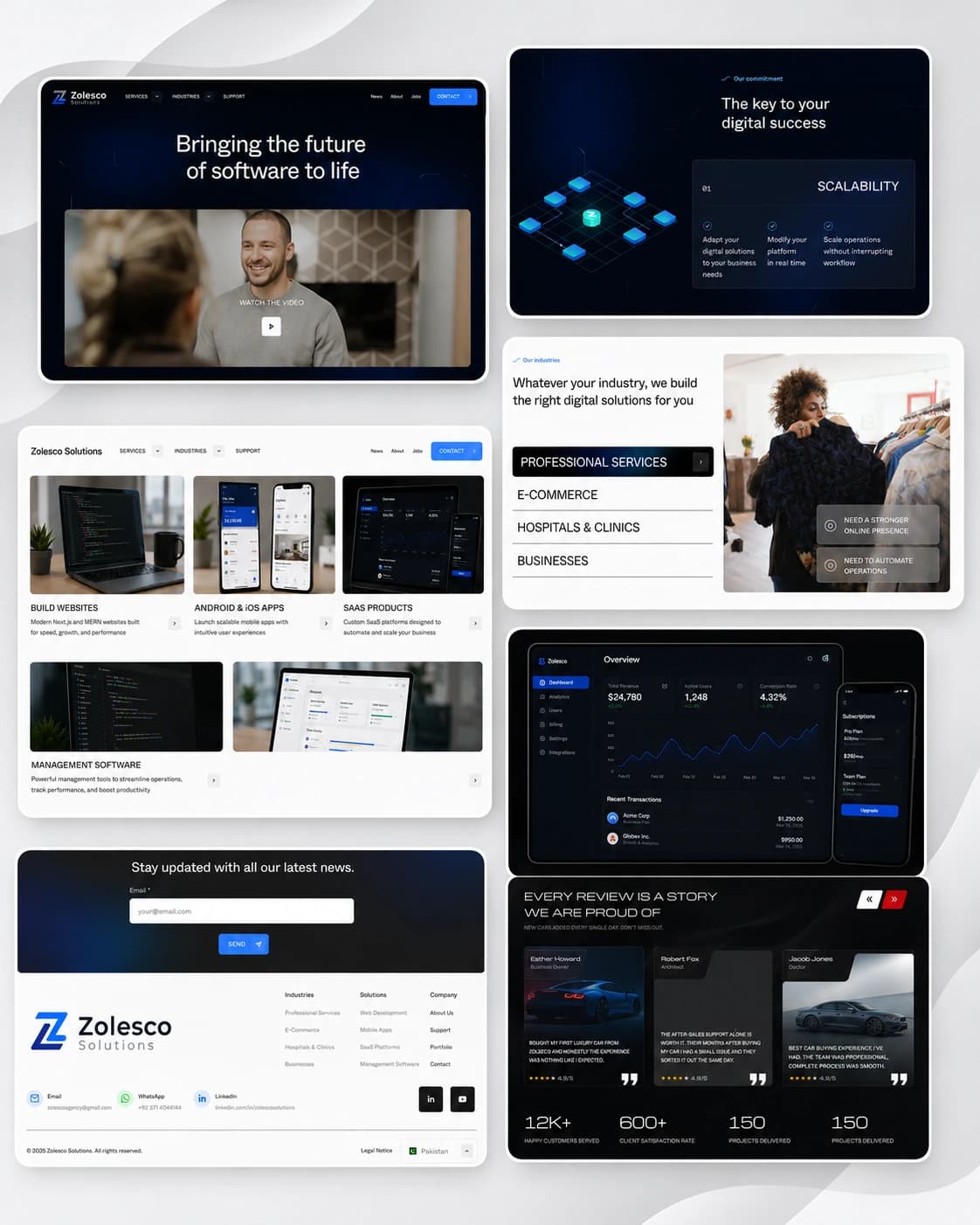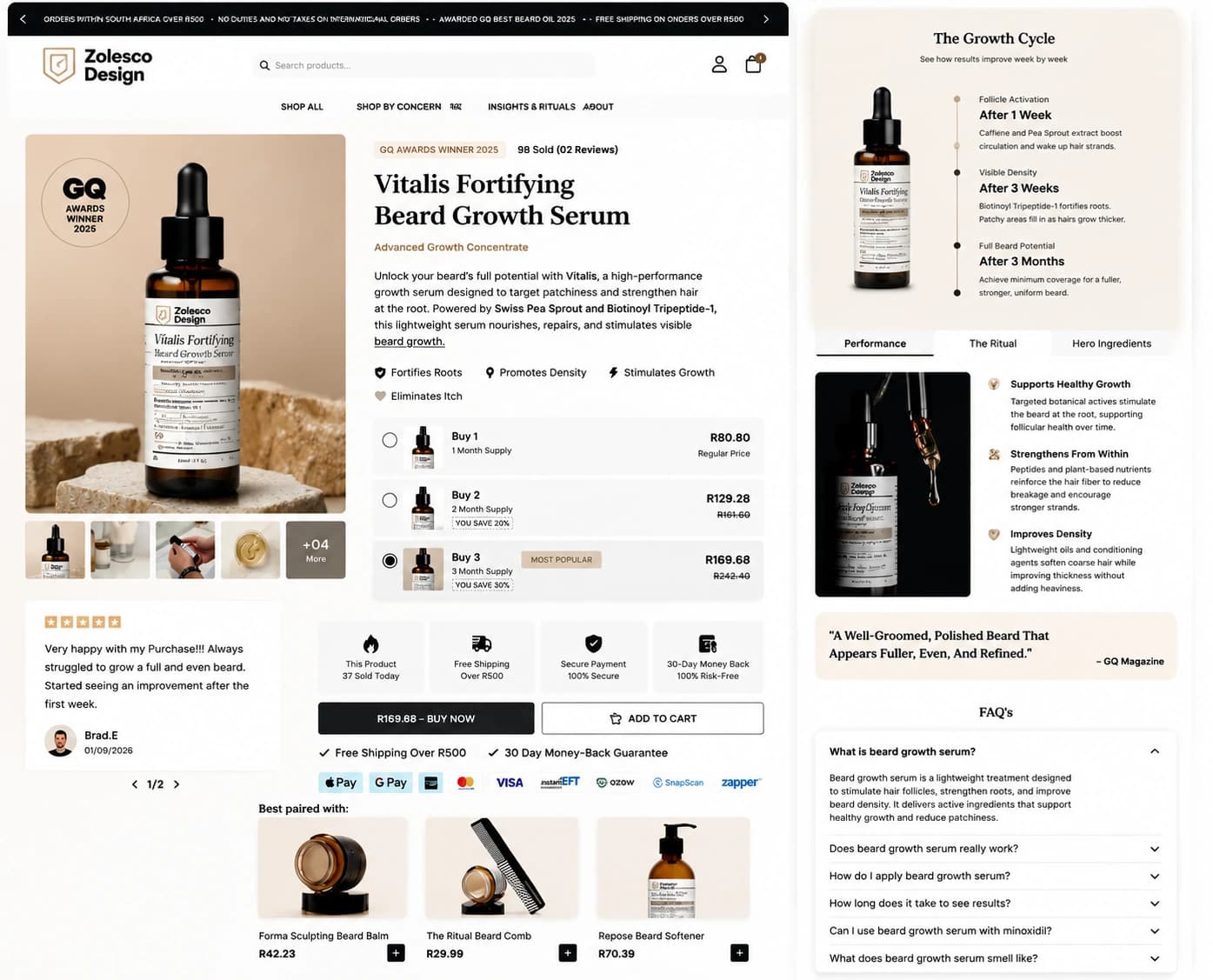
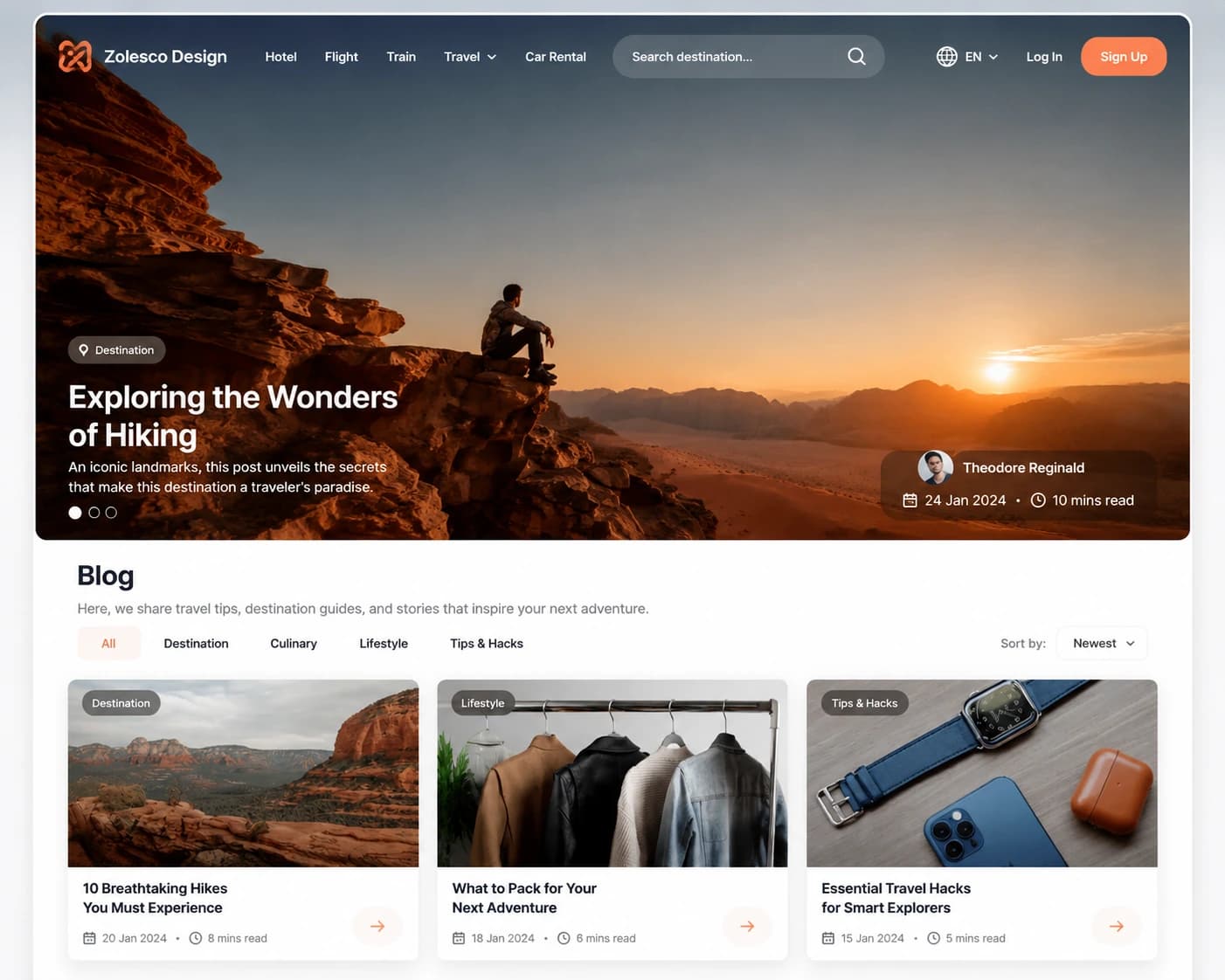
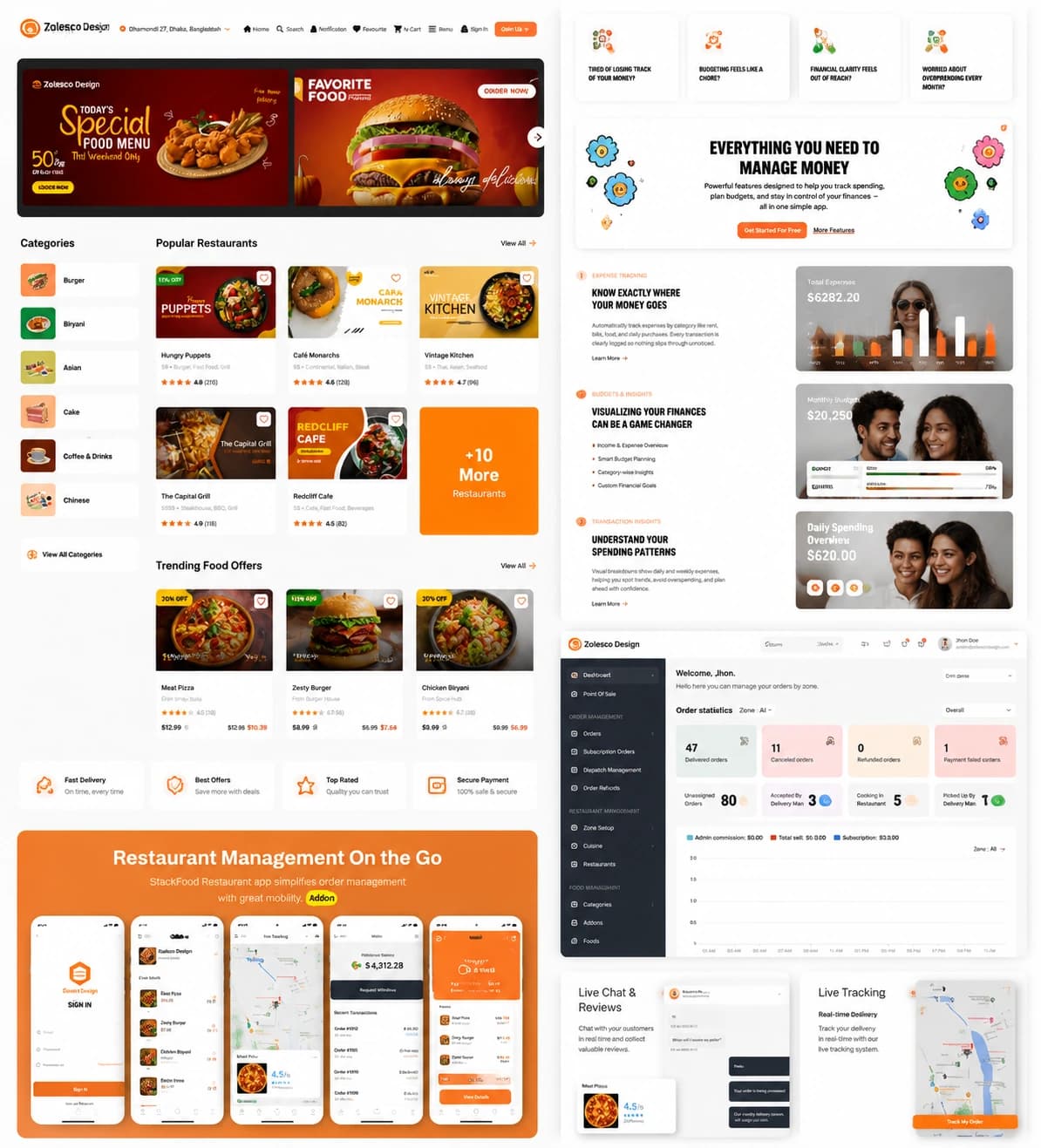
Choose by business problem, not by a long technical catalogue
Zolesco organizes delivery around the outcome you need: a focused digital product or a specialist HealthTech workflow. Detailed capabilities remain available deeper in the website.
Full-Stack Product Development
Build a focused digital product or operational system
Custom web applications, SaaS dashboards, portals, CRM and workflow systems, e-commerce platforms, startup MVPs and carefully bounded AI-enabled operations.
Zolesco is an early-stage, founder-led agency. Public positioning is based on verifiable capability, defined delivery standards and honest project boundaries rather than invented scale.
Privacy-preserving public profile
The website communicates founder credentials and accountability without publishing private identity details in public content or metadata.
Custom applications that connect public interfaces, authenticated areas, business rules and maintainable server logic.
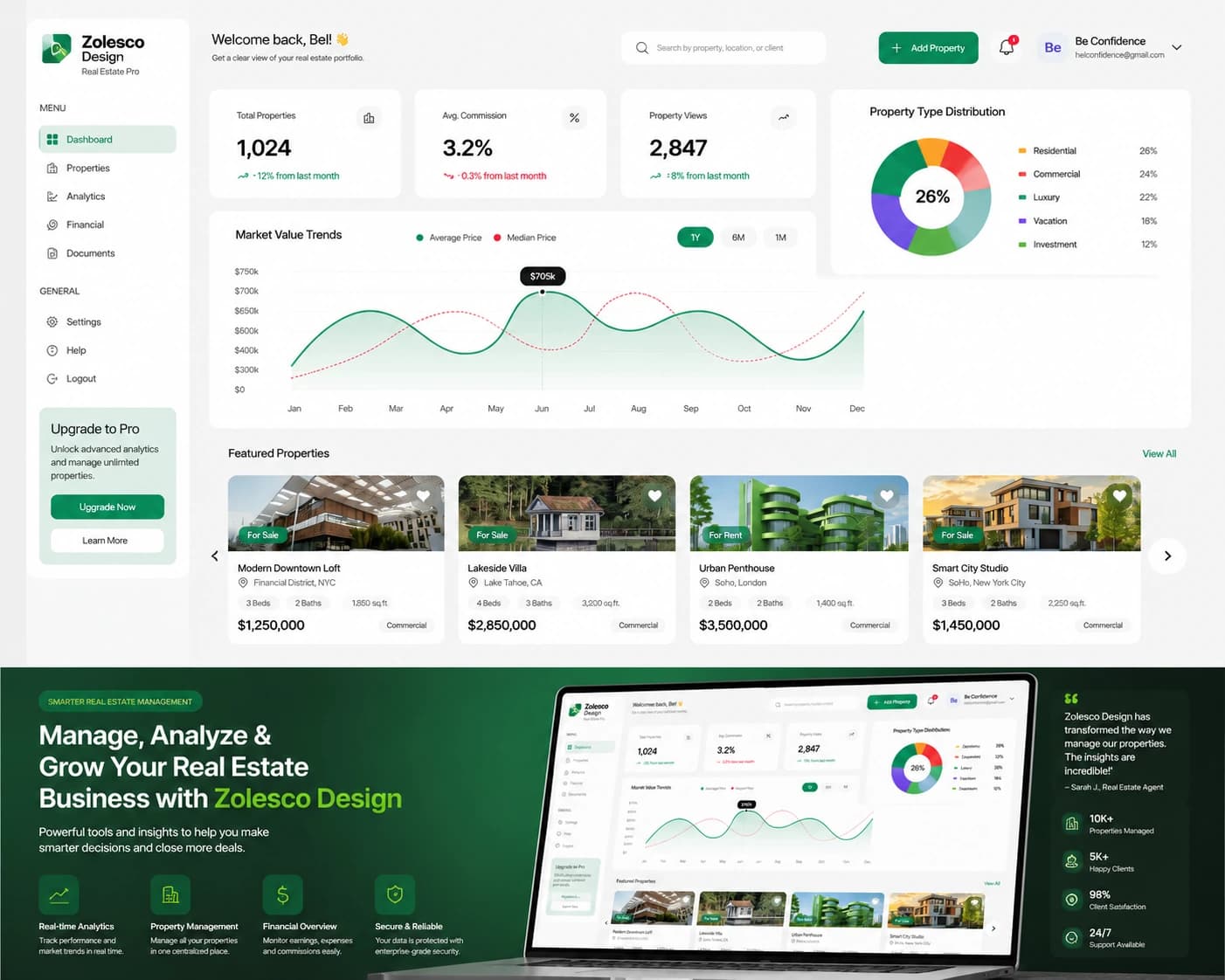
SaaS dashboards
Role-oriented dashboards, records, filters, status workflows and reporting interfaces for operational teams.
Portals and CRM
Customer, supplier, staff and partner portals with clear permissions, communication and record-management flows.
Workflow systems
Approvals, assignments, notifications and structured handoffs that replace fragmented manual work.
E-commerce platforms
Custom storefront, product, order and administration workflows shaped around the actual operating model.
MVPs and phased products
A focused first release with clear acceptance criteria and a documented path for later modules and integrations.
Patient-access workflows
Appointment, information, intake and communication flows designed with explicit escalation and privacy expectations.
Administrative systems
Clinic and hospital operations for schedules, staff, records, payments and service coordination within the approved scope.
HealthTech startup MVPs
Focused products that separate administrative utility from claims requiring clinical validation or regulatory review.
Portals and dashboards
Role-aware interfaces for staff, partners or patients with controlled access and clear operational responsibilities.
Controlled knowledge assistants
Source-aware assistants with bounded content, safe fallback, human escalation and no autonomous diagnosis.
Responsible boundaries
Data sensitivity, human review, hosting, jurisdiction and compliance dependencies are documented before implementation.
HealthTech Capabilities
Healthcare software with clinical context and responsible boundaries
HealthTech work is scoped around administrative and information workflows. Diagnosis, treatment, emergencies and regulated clinical claims remain outside the default service boundary.
Overflow development for defined modules or complete scoped builds
Co-delivery with transparent responsibilities and review points
White-label implementation where the partner retains the client relationship
Confidentiality, non-solicitation and client-contact rules agreed in writing
Source-code, milestone, quality-assurance and handover terms defined before work
A small first project option to validate communication and delivery fit
Selected Work
Full-stack, dashboard and HealthTech AI case studies
Explore three detailed examples selected for their demonstrated functionality: a full-stack operations system, dashboard and CRM interfaces, and a controlled HealthTech AI concept.
Commerce & Dashboard SamplesDemonstrationDetailed case study
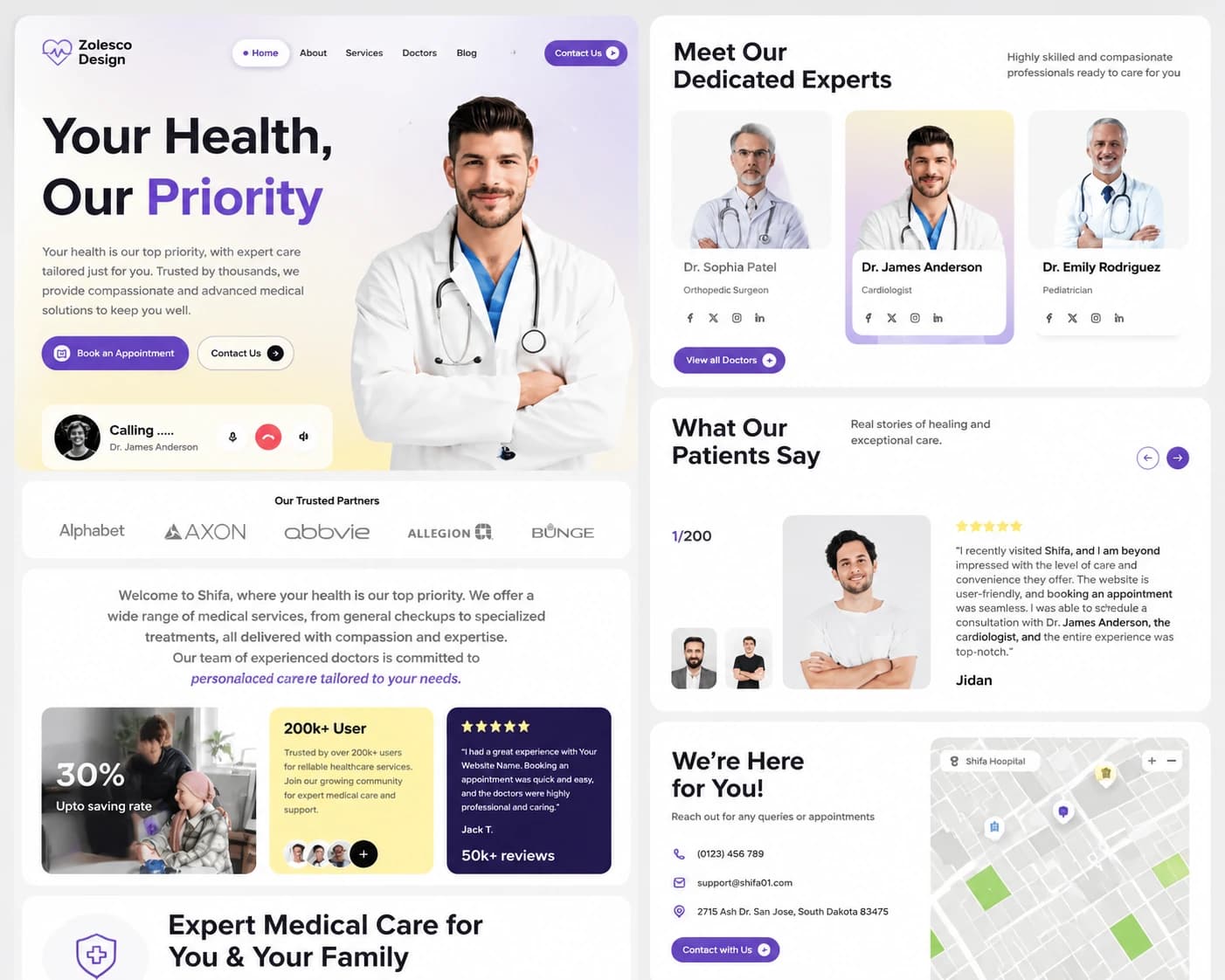
A hospital-management and intake-assistant concept covering appointments, doctors, schedules, patients, payments, source-aware answers and safe human escalation.
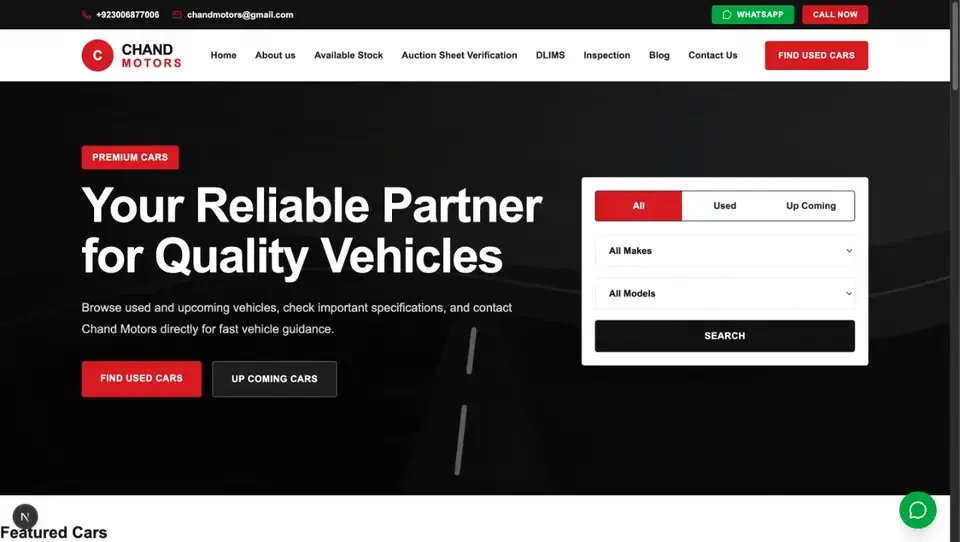
A dealership website and inventory-management system for presenting vehicles, supporting customer inquiries and maintaining listings through an administrative interface.
A clear path from business problem to maintainable handover
Every engagement begins with users, workflow, boundaries and acceptance criteria. This keeps technical decisions connected to the commercial purpose of the project.
01
Discovery and boundary setting
Clarify the business problem, users, current process, data sensitivity, decision criteria and non-negotiable exclusions.
02
Scope, architecture and milestones
Define the first release, delivery responsibilities, acceptance criteria, milestones, revision boundaries and ownership terms.
03
Design and development
Build the agreed interface, workflows and integrations in reviewable milestones with practical validation at each stage.
04
Acceptance and handover
Complete agreed testing, deployment support, documentation and source-code handover according to the written payment terms.
Ownership and Risk Reduction
Commercial clarity before technical complexity
The purpose of the delivery system is to reduce ambiguity: what is included, what remains excluded, who is responsible, how acceptance works and what the client owns.
Defined scope before development
Deliverables, exclusions, dependencies and acceptance criteria are written before implementation begins.
Milestone-based delivery
Larger projects use visible checkpoints so progress, feedback and payment responsibilities remain clear.
Source-code ownership
Custom source code and agreed handover materials are provided after full payment under the written project terms.
Responsible technical boundaries
Security, privacy, AI limitations, third-party dependencies and HealthTech exclusions are documented rather than implied.
Final price, timeline, compliance responsibilities and third-party costs are confirmed only after the required users, data, integrations and acceptance criteria are reviewed.
Contact
Tell us what needs to be built
Share the problem, current workflow, intended users, essential features, business trigger, budget range and approval process. Zolesco will review the inquiry and recommend the most suitable next step.
Normal response time is 2–12 working hours during monday to saturday.
Do not include passwords, API keys, payment details, patient records or other confidential credentials in the form.
AI Service Advisor
Ask about services or your project
Optional website analytics
Zolesco can use consent-based analytics to understand page and action usage. Names, contact details, messages and project descriptions are never sent as analytics events.