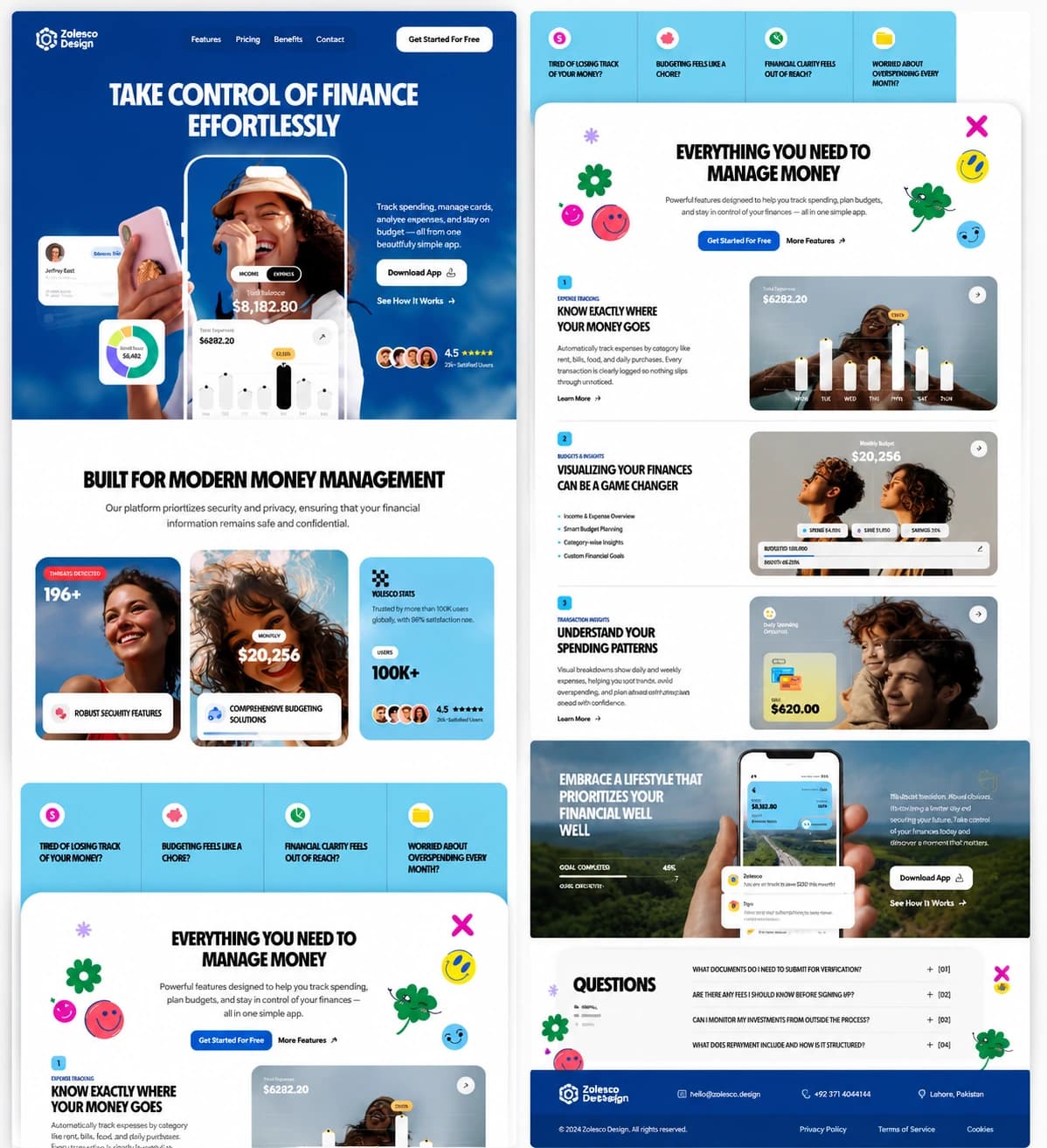
Premium Business Website Launch / Rebuild

Premium website launches and rebuilds for established service businesses

Zolesco helps established service businesses replace websites that feel dated, generic, unclear or restrictive. The rebuild is structured around credibility, service clarity, relevant proof, mobile usability and a clean path to enquiry, with custom design and development handled in one workflow.

Best fit

Who this is built for

  • Established service businesses whose current website no longer reflects the quality of the company
  • Professional and expert-service firms that need clearer services, proof and enquiry paths
  • Education, coaching, clinic, wellness and appointment-led businesses preparing for a stronger digital presence
  • Teams that need custom code and a maintainable foundation instead of another restrictive template
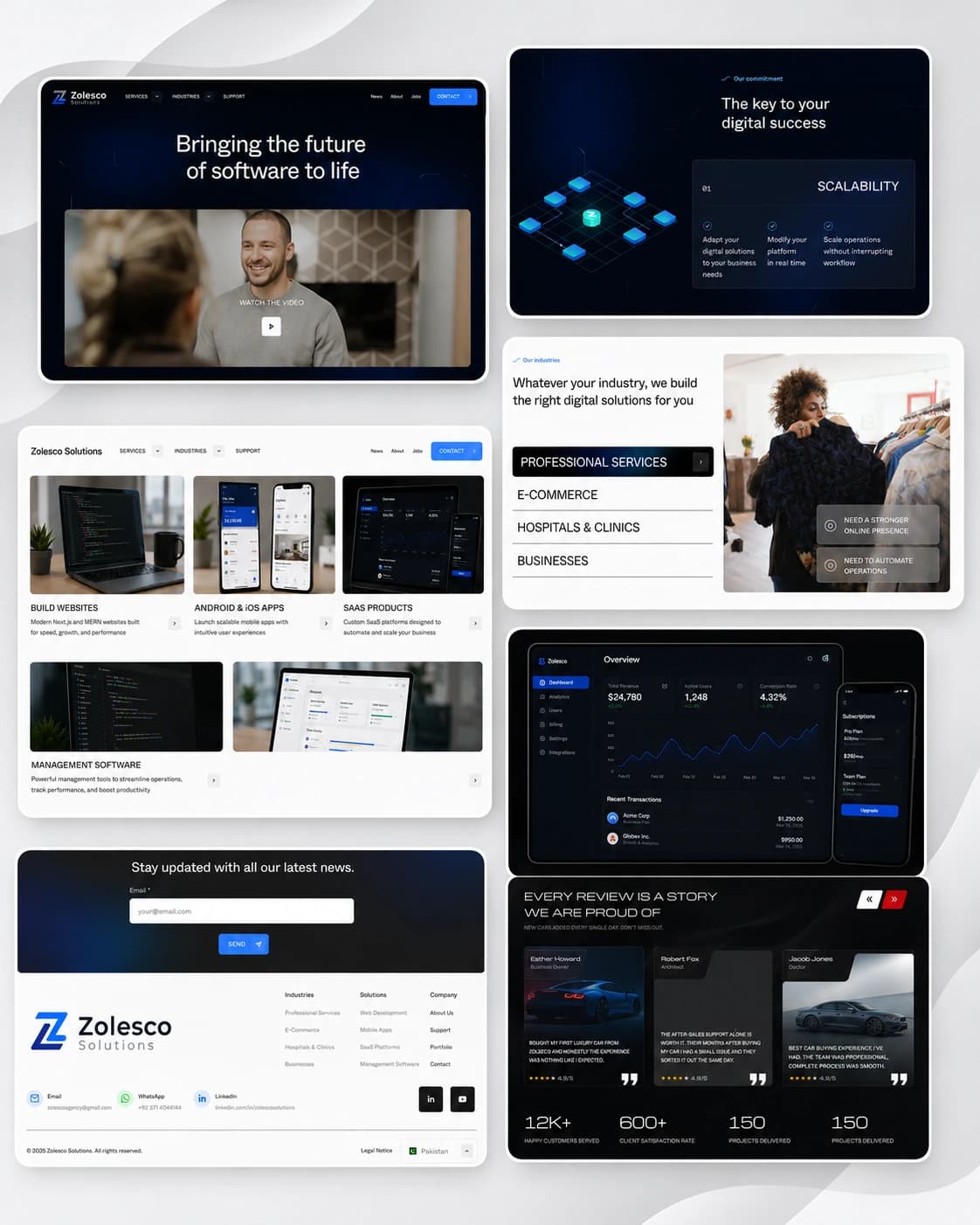
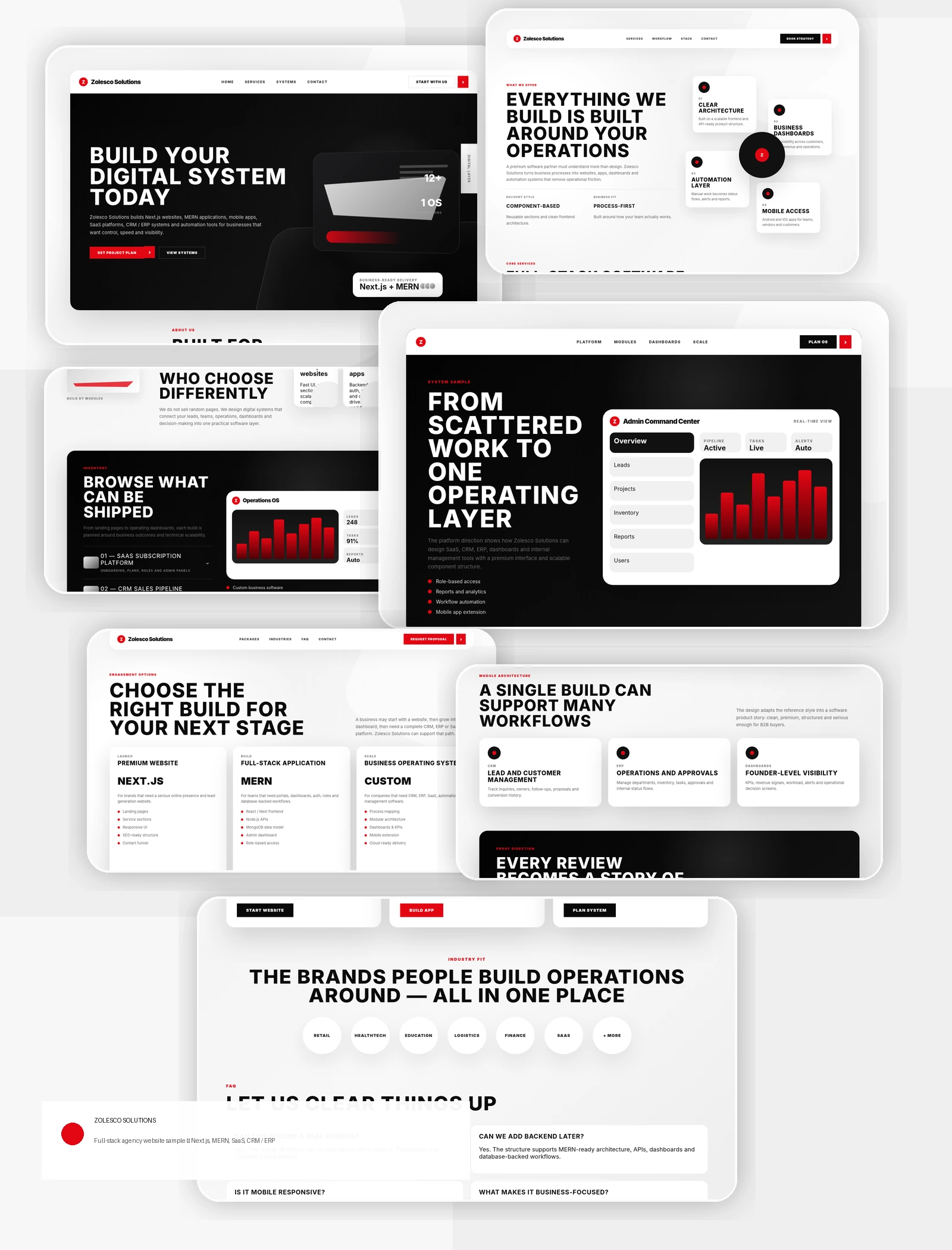
Business problem

What it helps solve

  • The business is stronger than the current website makes it look
  • Visitors cannot quickly understand the services, proof, differentiation or next step
  • The website is not creating a clear path to useful enquiries
  • The mobile experience feels dated, awkward or inconsistent with the brand
  • The current template, platform or technical setup is limiting future changes

Desired outcomes

What should change after the project

  • Present the business with stronger credibility across desktop and mobile.
  • Help buyers understand the core services, proof and next step with less searching.
  • Create a clearer enquiry path through the form, email and WhatsApp contact routes.
  • Leave a maintainable custom foundation that can expand when the business genuinely needs more.

Price drivers

What changes the final quote

  • Page count, number of unique layouts and the amount of content that must be restructured or migrated.
  • Readiness of copy, proof, photography, brand assets and legal/compliance content.
  • Forms, CMS needs, analytics, search migration, redirects and third-party integrations.
  • Approval complexity, revision scope and any accelerated delivery requirement.

Client inputs

What we need from the client

  • Approved business facts, priority services, target buyers and the main action visitors should take.
  • Existing website access, brand files, imagery, proof and source content that may be reused.
  • A clear internal approver who can review content and design decisions on schedule.
  • Domain, hosting and third-party account access when deployment or migration requires it.

Before choosing a redesign

Choose the smallest intervention that solves the actual problem.

A redesign is not automatically the right answer. The planning decision should distinguish a focused refresh, a structural rebuild, a platform migration, or an upstream business/content problem that should be resolved first.

Refresh

The offer, page structure, platform and measurement foundation are sound, but presentation or selected content needs improvement.

Watch for: Do not use a visual refresh to hide structural navigation, proof, migration or platform problems.

Rebuild

The existing site no longer explains the business clearly, the page hierarchy is weak, or the experience needs coordinated design and development change.

Watch for: Inventory URLs, content, analytics and ownership before replacement work begins.

Replatform

The current CMS, template or technical platform blocks required governance, performance, integrations, publishing or ownership needs.

Watch for: Separate platform migration risk from visual redesign so redirects, data, tracking and responsibilities are explicit.

Do not redesign yet

The real constraint is positioning, missing proof, unresolved content ownership, unclear sales process or another dependency that a new interface cannot solve.

Watch for: Fix the upstream business/content dependency before paying to rebuild the same uncertainty in a new design.

Rebuild control system

Strategy, migration and handover are part of the build.

The project is treated as a controlled business change, not only a visual replacement. The exact controls depend on the approved scope and current site risk.

  • Map the buyer decision, service hierarchy and primary enquiry action before visual design begins.
  • Inventory existing URLs, indexed content, redirects and internal links before changing site structure.
  • Define accessibility responsibilities and evaluate key flows during design and development, not only at final QA.
  • Preserve or deliberately replace analytics and key-event measurement so launch does not erase the baseline.
  • Test performance, forms, metadata, canonical/indexing controls and production behavior before acceptance.
  • Record domain, DNS, hosting, repository, analytics, licences and support ownership as part of handover.

Proof you can inspect

Executive Digital Experience

This portfolio entry is labelled Demonstration. It demonstrates relevant interface and product thinking without being presented as commissioned client work.

View project details

What you receive

A focused deliverable, not a vague bucket of hours.

Buyer, service and page hierarchy planning
Responsive UX architecture and high-fidelity interface design
Custom development for the approved page count and content structure
Proof, contact, WhatsApp and enquiry-path implementation
Technical SEO, performance and analytics foundations
Deployment support and source-code handover after full payment

Scope boundaries

Clear expectations before development starts.

  • Published packages apply to the listed page bands; portals, account systems and application workflows move into custom-software scope.
  • The client provides approved business facts, service details, proof, access and source materials unless copywriting or content production is explicitly included.
  • Revision rounds, acceptance and change requests follow the written project scope; new pages, features or integrations are not silently absorbed into the original price.
  • Domains, hosting and paid third-party services keep their own provider charges unless the written proposal states otherwise.

How we deliver

A visible path from scope to handover.

  1. 01

    Clarify the buyer, business trigger, credibility gaps, services, proof and primary enquiry goal.

  2. 02

    Agree the content inputs, page architecture, visual direction, scope boundaries and acceptance criteria.

  3. 03

    Design and develop the approved responsive experience with the required conversion and technical foundations.

  4. 04

    Run QA, complete in-scope revisions, support deployment and hand over the agreed project materials.

After launch

Ownership, deployment and after launch

  • Custom source code and agreed project materials are handed over after full payment under the written terms.
  • Domains, hosting and third-party subscriptions remain subject to their own provider terms and charges.
  • Ongoing maintenance or support is optional and is scoped separately rather than assumed indefinitely.
  • Analytics and technical search foundations can be implemented, but traffic, rankings, leads and revenue are not guaranteed.

Delivery terms

The operating expectations are documented before work expands.

The delivery policy explains written scope, milestones, revisions, change control, acceptance, confidentiality, third-party dependencies, source-code handover and optional post-launch support.

Review delivery & ownership

Capability map

The core service behind this page

Business Website Development

Premium corporate, service, portfolio and conversion websites built around trust, clarity and enquiries.

From $900 design / $1,440 build

Free scope planning tool

Turn your requirements into a comparable planning brief.

The browser-side scope builder surfaces page, content, migration, integration, brand and approval workstreams before you compare website quotes. It does not generate a binding price or delivery promise.

Build your scope brief

Buyer knowledge

Plan the decision before the scope call.

Authored guides cover the highest-friction buyer decisions behind this service, including comparison, scope, architecture, migration, integrations, risk, ownership and delivery planning where relevant.

All resources
Website rebuild cost

Website redesign cost: what actually changes the quote?

A useful website redesign quote is not just a page-count number. It should make the work, responsibilities, exclusions and technical risk visible enough that two proposals can be compared on the same basis.

Read guide
Provider selection

How to choose a website redesign partner without relying on the sales pitch

The right provider is the one whose delivery model matches the risk and complexity of the project. A useful evaluation looks beyond portfolio aesthetics to scope clarity, who actually does the work, migration planning, acceptance, ownership and post-launch responsibility.

Read guide
SEO migration risk

Website redesign SEO migration: what must be protected before launch

A redesign can improve a website while still damaging search discovery if useful URLs, redirects, metadata, internal links or crawlability are mishandled. The migration needs its own inventory, mapping and post-launch verification.

Read guide
Build-path comparison

Custom website vs template: which path fits an established service business?

A template is often enough when the requirement is simple. Custom work becomes easier to justify when the website must represent a differentiated business, support non-standard integrations or workflows, or provide control that the chosen platform cannot deliver cleanly.

Read guide
Timeline & readiness

Website redesign timeline: what makes a project move faster or slower?

A redesign schedule is usually controlled less by the calendar than by readiness: agreed scope, available content, timely decisions, integration access and a review process that prevents the project from repeatedly reopening finished work.

Read guide
Ownership & handover

Website ownership, hosting and handover checklist

A finished website is not a complete handover if the buyer still does not know who owns the domain, where the source lives, which third-party accounts are required or how to recover access when the original provider is unavailable.

Read guide
Redesign strategy

Website redesign strategy: refresh, rebuild, replatform or wait?

A redesign should start with the business problem, not a new visual style. This framework separates four interventions so a team can avoid rebuilding the wrong problem.

Read guide
Service-business information architecture

Service-business website information architecture: map the buyer decision, not the org chart

For a service business, information architecture should reduce buyer uncertainty. The page model needs clear ownership for services, proof, decisions and next steps without turning every wording variant into a separate URL.

Read guide
Website redesign RFP & procurement

Website redesign RFP: make agencies price the same problem

The purpose of a redesign RFP is not to prescribe every implementation detail. It is to give vendors the same business context, constraints and acceptance requirements so their proposals can be compared honestly.

Read guide
Redesign launch risk control

Website redesign launch risk control: URLs, analytics, accessibility and performance

A redesign launch is a controlled change to an existing digital property. Search migration is only one risk layer; measurement, accessibility, performance, forms, production behavior and ownership also need explicit acceptance checks.

Read guide

Plan before you enquire

Review the planning hub, published pricing context and delivery responsibilities before starting a conversation. These pages explain scope drivers, ownership and handover without forcing a full specification into the first inquiry.

Buyer questions

Direct answers before the scope conversation.

For the highest-friction buying questions, the practical answer comes first. Assumptions, limits and supporting pages stay visible so estimates and recommendations are not overgeneralized.

When is a website rebuild justified instead of a small refresh?

A rebuild is usually justified when the current site no longer represents the business accurately, important services or proof are hard to understand, mobile use is weak, or the existing platform makes meaningful changes difficult. A visual refresh alone is more appropriate when the structure, content and technical foundation are already sound.

Assumptions

  • The business already has a functioning offer or customer base and is not only experimenting with a temporary landing page.
  • The decision is based on buyer clarity, maintainability and technical constraints rather than design preference alone.

Limit / qualification

A rebuild does not by itself create demand or guarantee more enquiries. Traffic quality, offer strength, proof, sales follow-up and market conditions still affect results.

How much should an established service business budget for a website redesign?

There is no reliable universal redesign price. Zolesco publishes starting page-band pricing, but the final quote depends on the number of unique layouts, content readiness, migration work, integrations, review complexity, QA and handover responsibilities.

Assumptions

  • Published prices are starting references for defined scope bands rather than unlimited fixed-price commitments.
  • A final proposal is prepared only after the actual pages, responsibilities and dependencies are understood.

Limit / qualification

Market averages are not a substitute for a comparable scope. A lower or higher quote can be reasonable when it includes materially different work.

CompareWeak comparisonUseful comparison
PagesTotal URL count onlyUnique layouts, reusable templates and migration volume
ContentAssumed to be readyWho writes, edits, supplies proof and approves final copy
LaunchDeployment onlyRedirects, analytics, QA, ownership and post-launch verification

How long does a website redesign take?

A focused website scope can often move in weeks once requirements, content inputs and approvals are ready, but there is no responsible universal timeline. Unique layouts, content rewriting, migration, integrations and slow approvals can extend the schedule.

Assumptions

  • One accountable approver is available for milestone decisions.
  • Required content, access and third-party dependencies are supplied on schedule.

Limit / qualification

An accelerated deadline can change scope, sequencing or price. A published estimate should not be treated as a guaranteed completion date before dependencies are known.

Will a redesigned website guarantee more leads or revenue?

No. A rebuild can strengthen credibility, make services and proof easier to understand, improve mobile usability and create a clearer enquiry path, but it cannot guarantee traffic, leads, rankings, conversion rate, revenue or ROI.

Assumptions

  • The project can improve the website experience and measurement foundation within the agreed technical scope.
  • Commercial outcomes also depend on demand, offer quality, traffic sources, pricing, proof and the human sales process.

Limit / qualification

Any future performance claim should be tied to measured evidence, a defined period and the factors actually observed rather than attributed automatically to the redesign.

FAQ

Questions before you scope it.

The final proposal is based on the actual workflow, responsibilities and acceptance criteria—not assumptions.

Why choose a custom rebuild instead of a template or low-cost freelancer?

A template or freelancer can be the right answer for a simple brief. Zolesco is positioned for businesses that need the website to reflect an established operation, align design and development, clarify services and proof, and leave a maintainable technical foundation with explicit handover terms.

How quickly can a business website be launched?

Focused scopes commonly begin around 1–3 weeks after requirements and content are ready. The actual schedule depends on page count, approvals, integrations, content readiness and revision complexity, so the proposal confirms the delivery window before work starts.

Who is responsible for the website content?

The client supplies approved business facts, service details, proof and source materials unless copywriting or content production is included in the written scope. Zolesco structures the information and can define what content is needed before implementation begins.

What happens with hosting and maintenance after launch?

Hosting and third-party services keep their own provider terms and charges. The project includes the agreed deployment and handover work; any ongoing maintenance or support is optional and must be separately defined rather than assumed.

How are revisions and additional requests handled?

In-scope revisions follow the written project terms and acceptance process. New pages, features, integrations or materially different requirements are treated as scope changes so the timeline and price remain clear.

Will a new website guarantee more leads or revenue?

No. The website is designed to strengthen credibility, clarify the offer and create a cleaner conversion path, but traffic, rankings, enquiry volume, lead quality and revenue depend on factors beyond the website and are not guaranteed.

Will I receive the source code?

Custom project source code and agreed handover materials are supplied after full payment under the written project terms.

Website rebuild next step

Turn the current website problem into a clear rebuild scope.

Share the current site, the services that matter most, what feels outdated or unclear, and the business event driving the rebuild. We will use that context to define the most practical first scope.