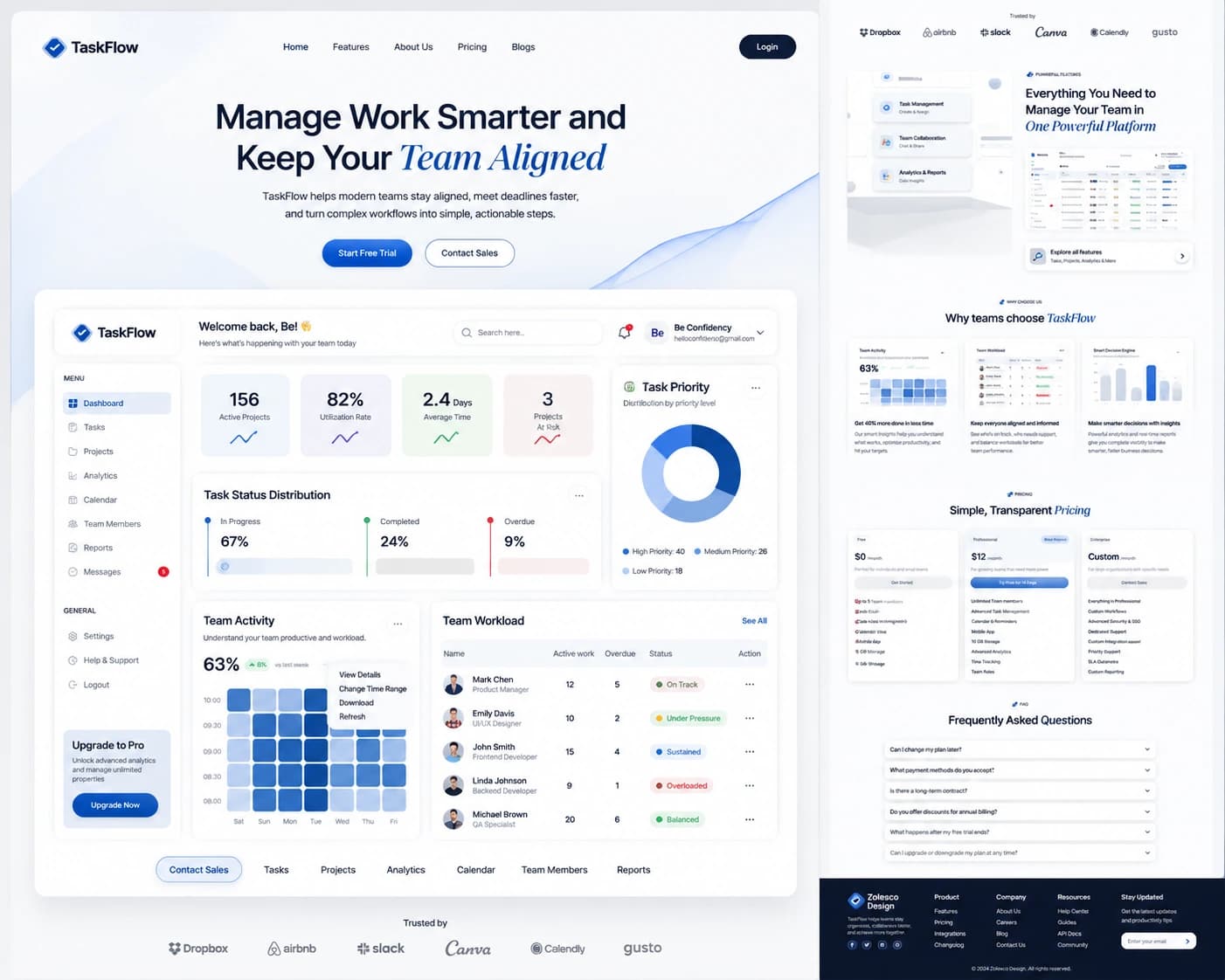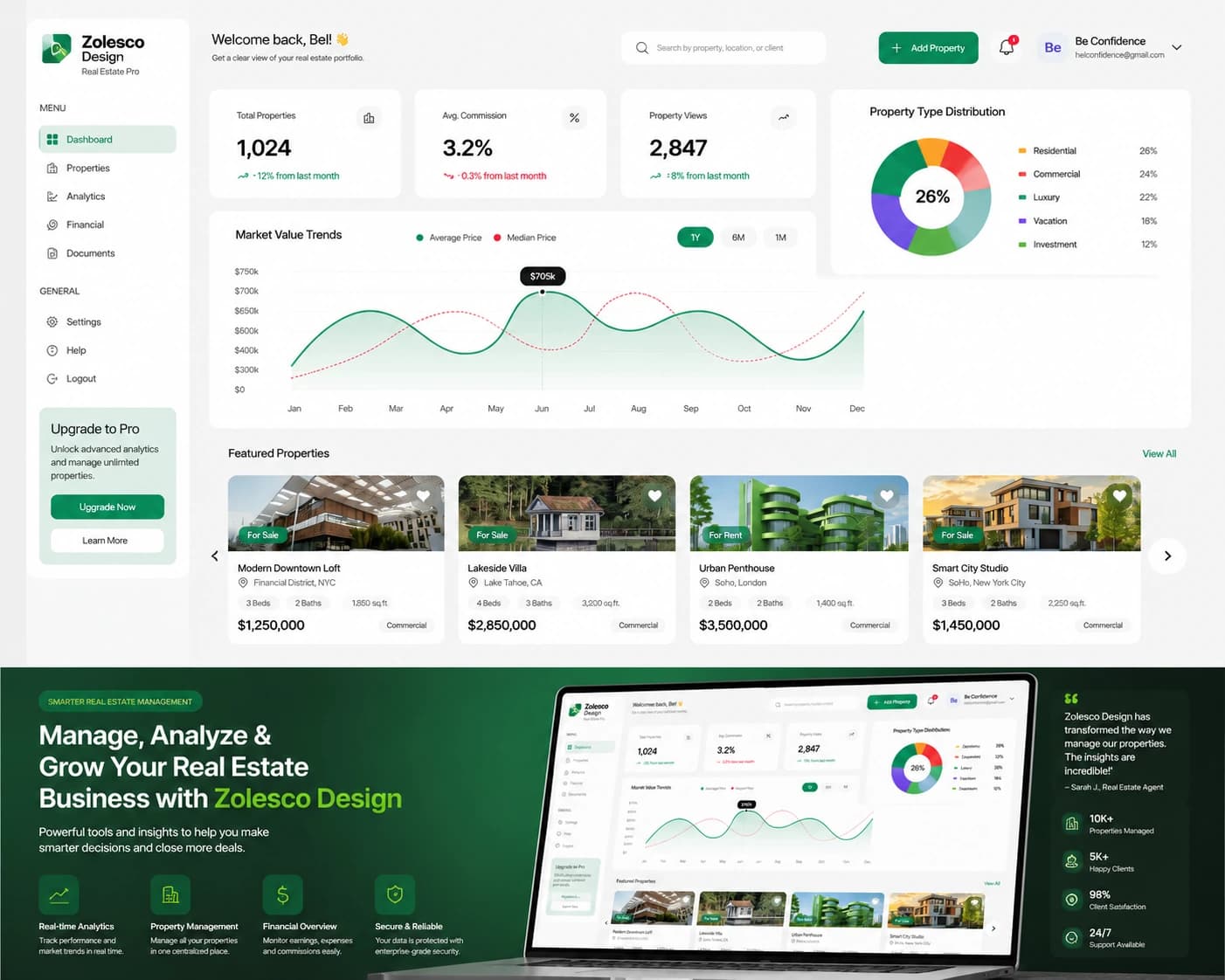
Custom Business Software

Custom software engineered around the way your business actually works

Custom business software is Zolesco's secondary high-value offer for organizations that have outgrown spreadsheets, fragmented tools or off-the-shelf limits. Discovery starts by deciding whether the requirement should be bought, configured, integrated or custom-built; when a custom system is justified, interface, business logic, data, permissions, integrations and operations are scoped around the highest-value workflow first.

Best fit

Who this is built for

  • Businesses replacing spreadsheets or fragmented tools
  • Startups building a web-based product or MVP
  • Teams that need customer, supplier, staff or partner portals
  • Organizations requiring custom workflows that off-the-shelf tools cannot support
Business problem

What it helps solve

  • Important processes depend on manual handoffs and disconnected systems
  • Users need role-specific access to records and actions
  • The business requires custom logic, integrations or data structures
  • Existing tools cannot scale with the required workflow
  • The team cannot tell whether buying, configuring, integrating or custom-building is the lowest-risk path

Desired outcomes

What should change after the project

  • Replace high-friction manual work with one defined browser-based workflow.
  • Give each user role access to the records and actions they actually need.
  • Create a maintainable data and application foundation instead of adding another disconnected tool.
  • Ship a focused first release that can be extended through clearly scoped modules.

Price drivers

What changes the final quote

  • Screen count, workflow depth, user roles, permissions and approval states.
  • Database complexity, reporting, search/filter requirements and data migration volume.
  • Authentication, billing, notifications, external APIs and other integrations.
  • Security, regulatory, audit, availability or deployment requirements beyond a standard web application.

Client inputs

What we need from the client

  • The current workflow, users, records, decisions and handoffs the system needs to support.
  • Examples of current spreadsheets, tools, reports or data structures where they are safe to share.
  • Integration documentation and approved account access when external systems are in scope.
  • A product owner or decision-maker who can confirm priorities and acceptance criteria.

Proof you can inspect

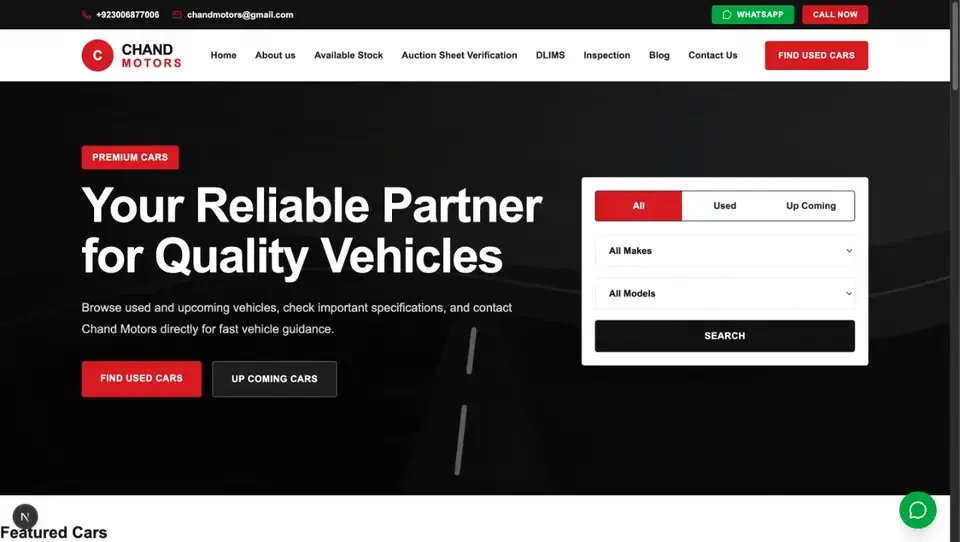
Car Showroom & Inventory Management System

This portfolio entry is labelled Demonstration. It demonstrates relevant interface and product thinking without being presented as commissioned client work.

View project details

What you receive

A focused deliverable, not a vague bucket of hours.

Product and workflow architecture
Responsive frontend application
Backend APIs and business logic
Database schema, validation and approved access controls
Authentication, roles and agreed integrations
Role/permission matrix and integration/dependency map for the approved release
Testing, deployment support, documentation and source handover

Scope boundaries

Clear expectations before development starts.

  • Published web-app prices are based on screen bands and still require scope confirmation for roles, integrations, data and complexity.
  • Enterprise integrations, regulated workflows, native mobile requirements and unusually large migrations are quoted separately.
  • Third-party licences and usage fees are not included unless specifically stated.

How we deliver

A visible path from scope to handover.

  1. 01

    Test the buy / configure / integrate / build decision against workflow fit, data, permissions, integrations, time-to-value and long-term ownership.

  2. 02

    Map users, records, actions, permissions, dependencies and the measurable business outcome; then define the smallest useful release and explicit non-goals.

  3. 03

    Design and build frontend, backend, database and approved integrations in reviewable milestones with acceptance criteria attached to the critical workflows.

  4. 04

    Run role, workflow, integration and release acceptance checks, deploy the approved release and complete documentation, ownership and change-control handover.

After launch

Ownership, deployment and after launch

  • Deployment, documentation and source handover follow the written scope and payment milestones.
  • External infrastructure, licences and usage-based services keep their own provider costs and limits.
  • Bug-fix, maintenance and feature-development arrangements after acceptance are explicitly defined rather than implied.
  • Future modules are treated as new scope so the initial release remains measurable and controlled.

Delivery terms

The operating expectations are documented before work expands.

The delivery policy explains written scope, milestones, revisions, change control, acceptance, confidentiality, third-party dependencies, source-code handover and optional post-launch support.

Review delivery & ownership

Capability map

The core service behind this page

Full-Stack Software Development

Custom business applications, portals and operational systems connecting frontend, backend and data workflows.

Complete builds from $6,300

Buyer knowledge

Plan the decision before the scope call.

Authored guides cover the highest-friction buyer decisions behind this service, including comparison, scope, architecture, migration, integrations, risk, ownership and delivery planning where relevant.

All resources

Plan before you enquire

Review the planning hub, published pricing context and delivery responsibilities before starting a conversation. These pages explain scope drivers, ownership and handover without forcing a full specification into the first inquiry.

Buyer questions

Direct answers before the scope conversation.

For the highest-friction buying questions, the practical answer comes first. Assumptions, limits and supporting pages stay visible so estimates and recommendations are not overgeneralized.

When does custom software make more sense than an off-the-shelf product?

Custom software is most defensible when the business has a specific workflow, permissions model, data structure or integration need that standard products cannot support without persistent workarounds. Off-the-shelf software is usually preferable when a mature product already solves the problem adequately at acceptable operating cost.

Assumptions

  • The current workflow and failure points can be described clearly enough to compare build versus buy.
  • The business is prepared to own product decisions, data quality and ongoing operating responsibility for a custom system.

Limit / qualification

Custom development introduces maintenance and change responsibility. It should not be chosen only because a team prefers bespoke technology.

Decision factorOff-the-shelf is usually strongerCustom is usually stronger
WorkflowStandard process fits with minor configurationCore workflow is materially different or constrained
Time to startImmediate adoption matters mostA phased build is acceptable
OwnershipVendor roadmap is acceptableControl over workflow, data model or integrations is strategically important

What should go into the first release of a custom business system?

The first release should cover the smallest complete workflow that creates meaningful operational value: the essential users, records, permissions, decisions and integrations needed to complete that workflow safely from start to finish.

Assumptions

  • The team can identify one priority workflow instead of treating every future idea as launch scope.
  • Acceptance criteria can be written around observable tasks and states.

Limit / qualification

A first release is not the same as an unfinished prototype. Security, data integrity and required operational controls still need to be appropriate for the actual use case.

FAQ

Questions before you scope it.

The final proposal is based on the actual workflow, responsibilities and acceptance criteria—not assumptions.

What kinds of custom software can Zolesco build?

Typical work includes portals, operational systems, approval workflows, business applications, dashboards, CRM-style products, inventory systems and other browser-based software.

Can you build the product in phases?

Yes. Larger systems are usually safer to deliver as a focused first release followed by clearly scoped modules and integrations. The first release should prove a specific workflow or operating outcome rather than becoming a smaller copy of every future feature.

Should I build custom software if an existing SaaS product already covers most of the requirement?

Not automatically. If a mature product fits the workflow with acceptable configuration, integration, data-control and operating costs, buying or extending it can be lower risk. Custom development is better justified when important workflows, permissions, integrations or operating constraints cannot be supported economically without repeated workarounds.

Do you provide deployment and source-code handover?

Yes. Deployment support, documentation and custom source-code handover are included according to the written project terms and payment milestones.

Software discovery next step

Start with the workflow that creates the most operational friction.

Describe the users, records, actions, approvals and current tools. We will use that information to define a focused first release before the product grows into unnecessary complexity.