Best fit
Who this is built for
- Design agencies needing development capacity
- Marketing agencies delivering websites or digital products
- Consultancies requiring product implementation support
- Studios handling temporary delivery peaks
Agency Delivery Partnerships
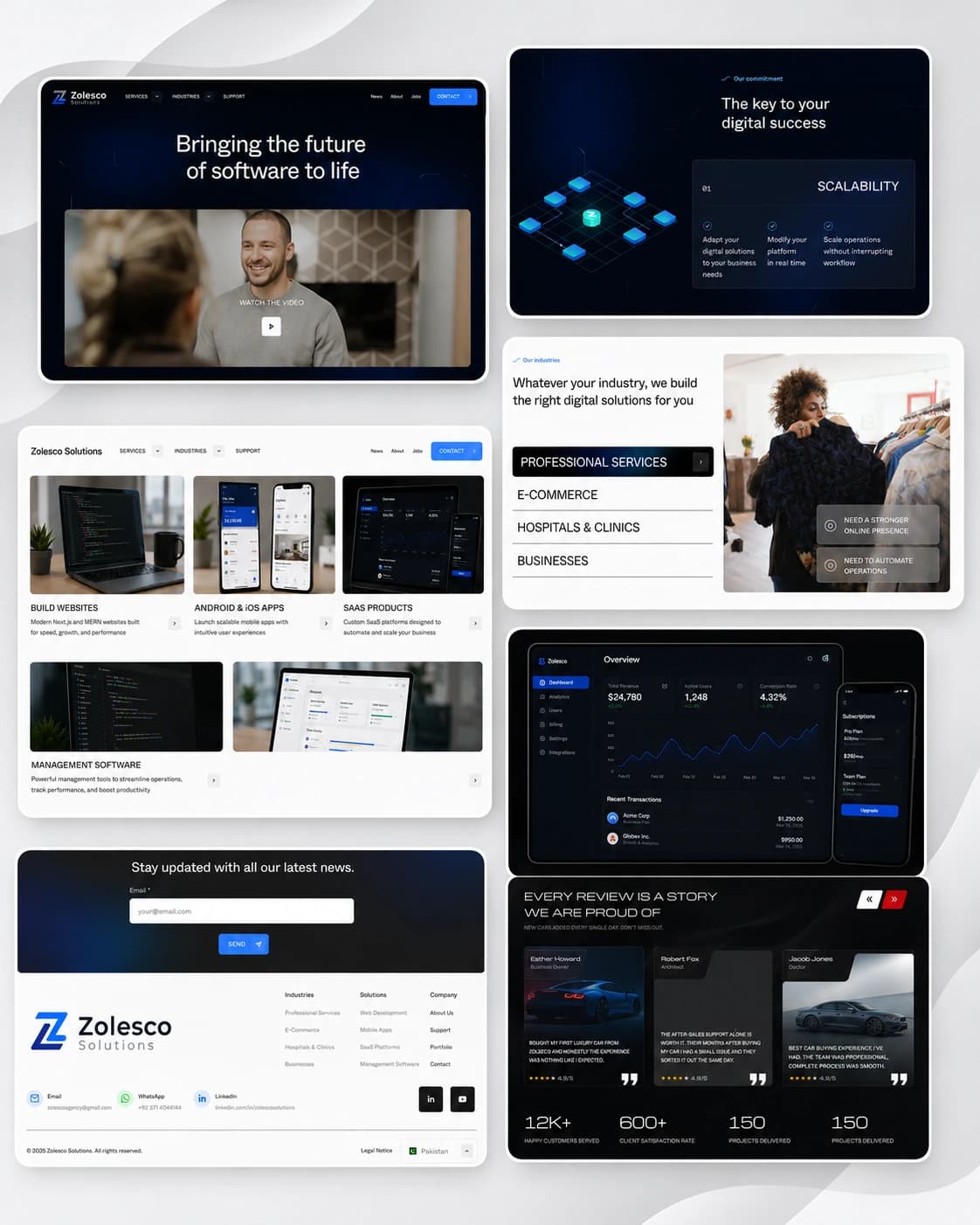
Zolesco supports agencies with scoped design and implementation capacity while preserving the partner's client relationship. Engagements are structured around confidentiality, milestones, communication boundaries, ownership and technical handoff.
Best fit
Business problem
Desired outcomes
Price drivers
Client inputs
Choose the partner model deliberately
White-label delivery should match the agency's actual capacity problem. The engagement model, client-contact boundary, repository ownership and acceptance path should be explicit before client-sensitive information or production access is shared.
The agency has a defined client scope and needs a delivery partner to implement an agreed website, product or software project.
Watch for: Acceptance criteria, change control and handoff ownership must be agreed before the build becomes client-critical.
The agency retains most delivery but needs a bounded capability such as backend work, UI implementation, e-commerce or a software module.
Watch for: Define module interfaces, dependencies and who owns integration testing across the boundary.
The problem is a temporary delivery peak rather than a permanent gap in the agency's own team.
Watch for: Avoid vague hour pools; identify the work queue, review cadence, access level and definition of done.
The agency repeatedly needs external production capacity and wants a stable operating workflow across multiple projects.
Watch for: Commercial terms, confidentiality, client communication, prioritization, continuity and offboarding need an explicit operating model.
Partner-protection controls
Confidentiality and ownership terms remain contractual matters, but the delivery workflow can make responsibilities, access and handoff materially clearer before work begins.
Proof you can inspect
This portfolio entry is labelled Demonstration. It demonstrates relevant interface and product thinking without being presented as commissioned client work.
What you receive
Scope boundaries
How we deliver
Confirm partner responsibilities, confidentiality and communication boundaries.
Define the module, milestones, acceptance criteria and handoff expectations.
Deliver reviewable design or development milestones under the agreed partner workflow.
Complete acceptance, documentation and handoff without disrupting the partner relationship.
After launch
Delivery terms
The delivery policy explains written scope, milestones, revisions, change control, acceptance, confidentiality, third-party dependencies, source-code handover and optional post-launch support.
Review delivery & ownershipCapability map
Confidential implementation support for agencies that need additional product and development capacity.
Custom partner scope
Selected work
Plan before you enquire
Review the planning hub, published pricing context and delivery responsibilities before starting a conversation. These pages explain scope drivers, ownership and handover without forcing a full specification into the first inquiry.
FAQ
The final proposal is based on the actual workflow, responsibilities and acceptance criteria—not assumptions.
Yes, when the project can be delivered effectively through partner-controlled communication and the responsibilities are defined in writing.
Yes. The engagement can cover UI/UX, websites, software modules, e-commerce, dashboards, backend work or a combination of capabilities.
Pricing is based on the underlying scope and delivery model. Ongoing design support can also use a subscription structure where appropriate.
Share the scope, stack, deadline, communication rules and handoff expectations. We will confirm whether the capacity and delivery model fit before accepting the engagement.
Zolesco can use consent-based analytics to understand page and action usage. Names, contact details, messages and project descriptions are never sent as analytics events.