Specialist E-Commerce Development

Commerce experiences that make products easier to discover, trust and buy

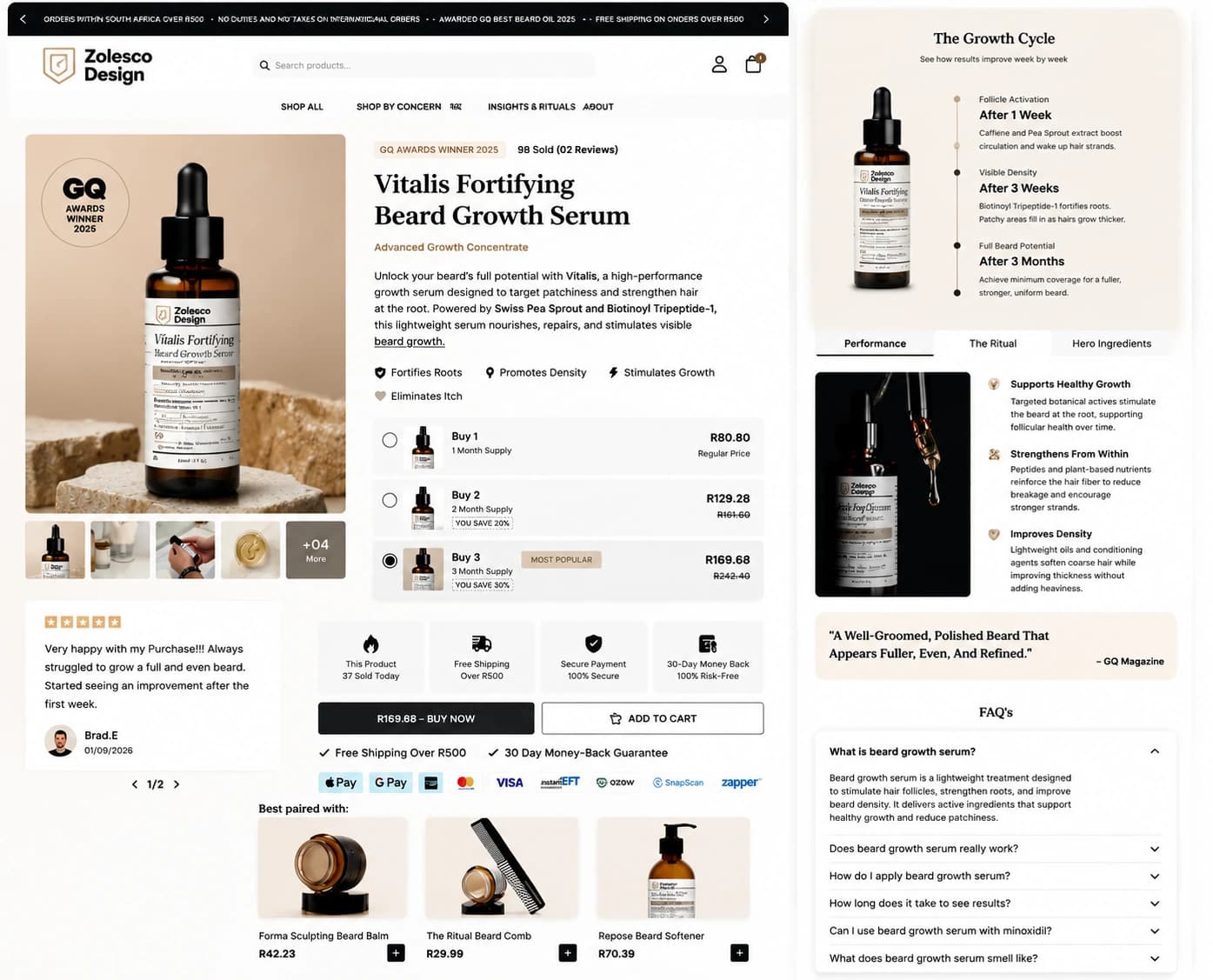
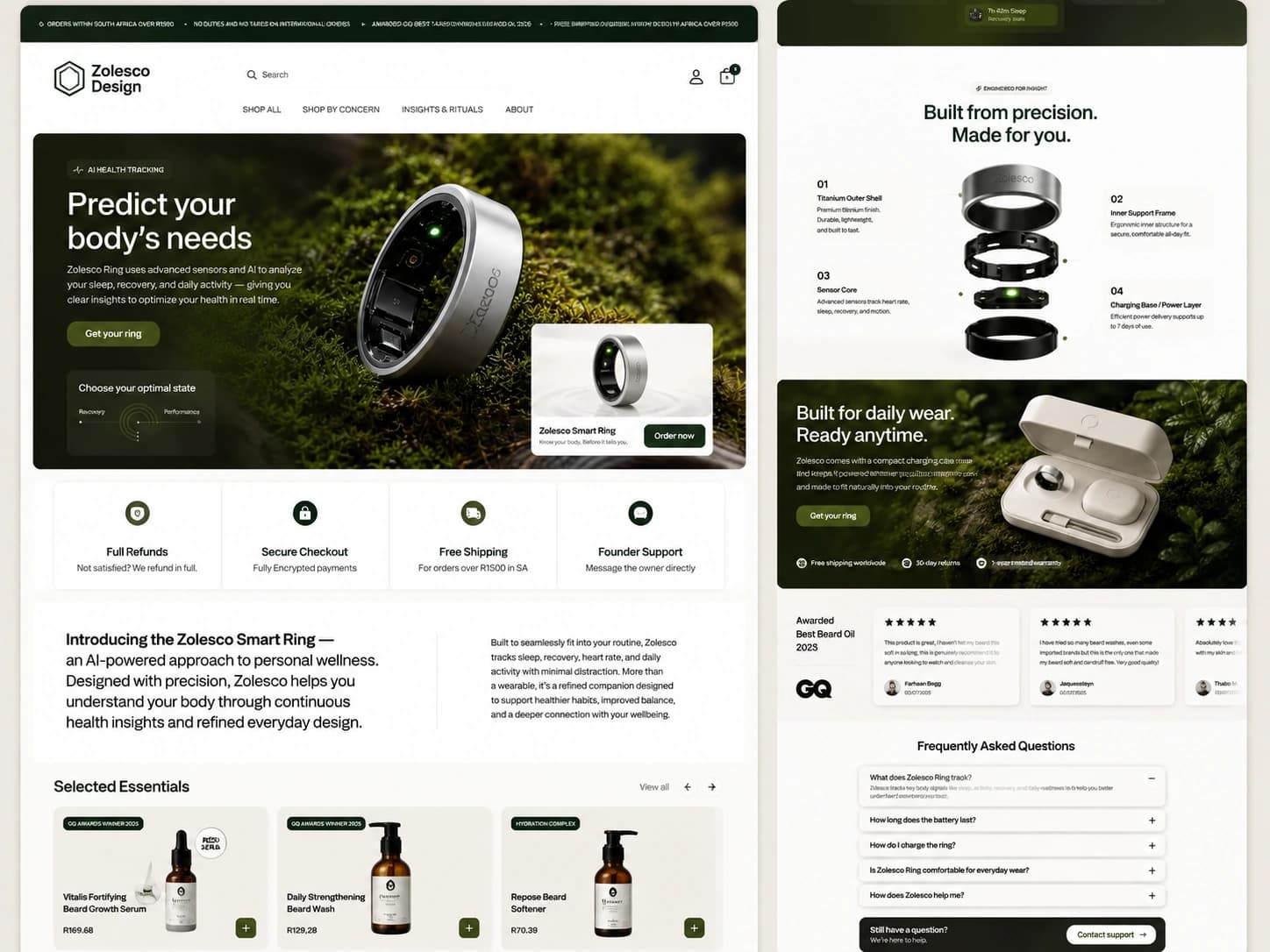
E-commerce is a specialist direct offer for product-led businesses. Discovery starts by choosing the commerce operating model—hosted, open-source or custom/headless—against catalogue, checkout, integration, administration and ownership requirements. Zolesco then designs the storefront and operational workflow together: product discovery, catalogue structure, merchandising, cart and checkout, customer actions, orders and the administration experience behind the scenes.

Best fit

Who this is built for

  • Product brands and online retailers
  • Businesses replacing a generic or limiting store experience
  • Companies that need custom catalogue, checkout or administration workflows
  • Brands planning phased commerce growth and integrations
Business problem

What it helps solve

  • Products are difficult to browse or compare
  • The checkout journey creates unnecessary friction
  • Store administration does not match the actual operating process
  • The current commerce platform cannot support required workflows or presentation
  • The team cannot tell whether to stay on the current platform, replatform, extend it or custom-build part of the commerce stack
  • Payment, shipping, tax, inventory or fulfilment dependencies have unclear failure and reconciliation behavior

Desired outcomes

What should change after the project

  • Make products easier to discover, compare and purchase across mobile and desktop.
  • Align catalogue, checkout and administration flows with the way the business actually operates.
  • Reduce avoidable friction between product interest, cart, checkout and order handling.
  • Create a commerce foundation that can add integrations only when the operating need is clear.

Price drivers

What changes the final quote

  • Catalogue size, product variants, filtering, search and merchandising requirements.
  • Checkout, payments, shipping, taxes, subscriptions or region-specific commerce logic.
  • Order, customer, inventory and administration workflows behind the storefront.
  • Migration from an existing store, data cleanup and third-party integration complexity.

Client inputs

What we need from the client

  • Product catalogue structure, pricing rules, variants, imagery and approved product information.
  • Payment, shipping, fulfilment and customer-service requirements.
  • Access to the current commerce platform and provider documentation where migration is required.
  • A commercial approver who can confirm policies, checkout decisions and launch readiness.

Proof you can inspect

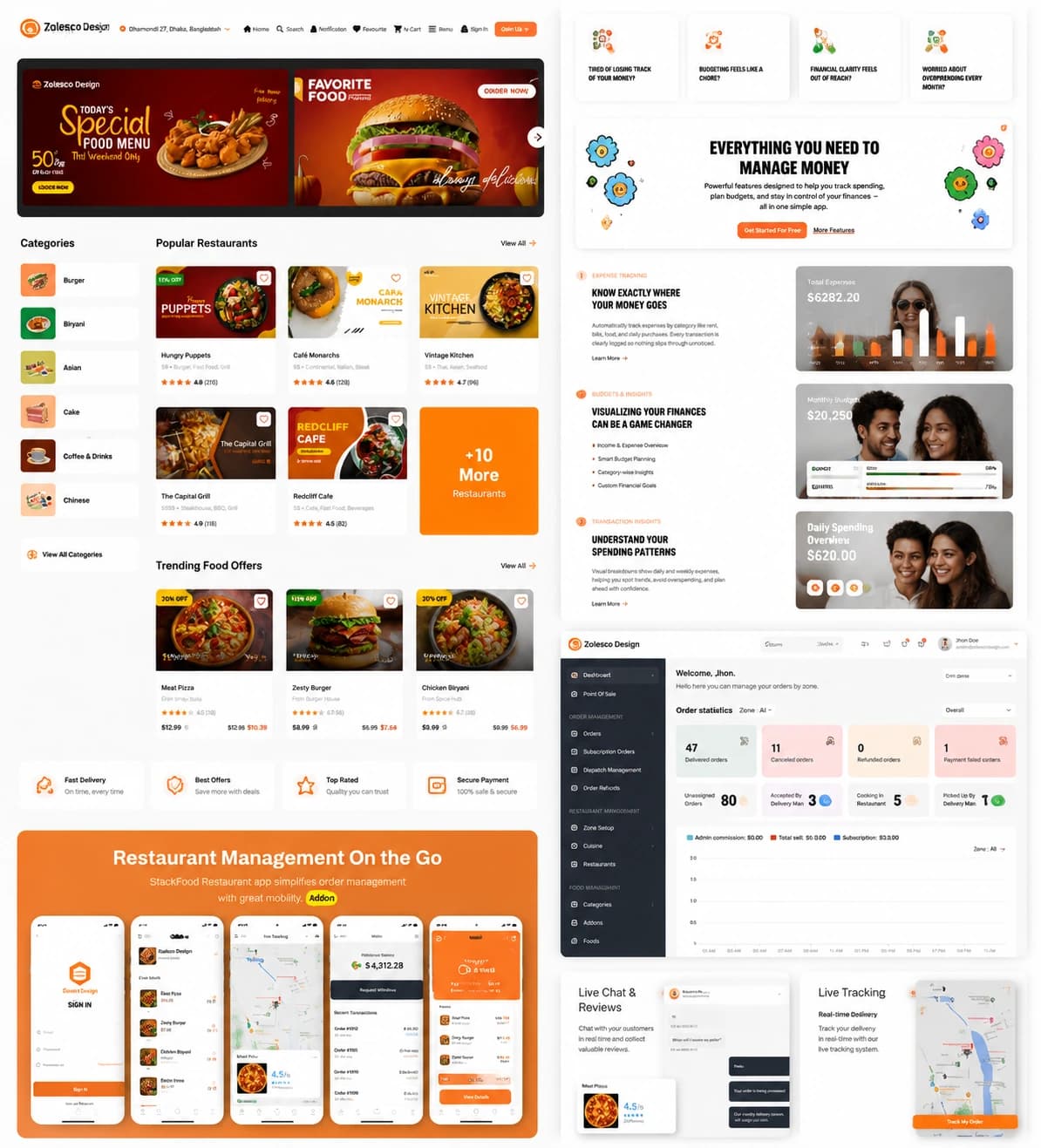
Restaurant Commerce Experience

This portfolio entry is labelled Concept. It demonstrates relevant interface and product thinking without being presented as commissioned client work.

View project details

What you receive

A focused deliverable, not a vague bucket of hours.

Responsive storefront and product-discovery UX
Category, product and merchandising page systems
Cart and checkout architecture
Order and administration workflow for the approved scope
Approved payment, shipping or communication integrations
Catalogue/data ownership map plus checkout dependency and failure-state plan for the approved scope
Migration URL/redirect register when an existing store is being replatformed
Deployment, analytics and handover support

Scope boundaries

Clear expectations before development starts.

  • Commerce complexity varies widely, so the final development price is confirmed after products, variations, payments, shipping and admin workflows are reviewed.
  • Provider fees for payments, couriers, email, SMS, storage and other third-party tools remain separate.
  • Marketplaces, subscriptions, advanced inventory, wholesale and multi-region commerce require separate scope review.

How we deliver

A visible path from scope to handover.

  1. 01

    Choose stay / replatform / extend / custom-build and hosted / open-source / custom-headless operating model based on catalogue, checkout, integrations, operations and ownership.

  2. 02

    Map products, variants, taxonomy, source-of-truth systems, customer journeys, administrative roles and migration requirements before interface implementation.

  3. 03

    Design the storefront, product system, cart and checkout experience together with payment, shipping, tax, inventory and fulfilment dependency behavior.

  4. 04

    Build the approved commerce and administration workflows, including URL/redirect handling when an existing store changes structure.

  5. 05

    Test successful and failure transaction states, order/admin workflows, redirects, measurement and recovery evidence; then deploy and hand over the agreed system.

After launch

Ownership, deployment and after launch

  • The agreed storefront and administration source are handed over under the written payment and ownership terms.
  • Payment gateways, couriers, email/SMS tools and other commerce providers retain their own charges and service limits.
  • Post-launch support, catalogue operations and feature work are optional follow-on scopes.
  • Transaction performance, revenue and conversion outcomes depend on traffic, offer, operations and other factors beyond the build itself.

Delivery terms

The operating expectations are documented before work expands.

The delivery policy explains written scope, milestones, revisions, change control, acceptance, confidentiality, third-party dependencies, source-code handover and optional post-launch support.

Review delivery & ownership

Capability map

The core service behind this page

E-Commerce Development

Storefronts, catalogues, checkout journeys and administration workflows for product-led businesses.

From $1,440

Buyer knowledge

Plan the decision before the scope call.

Authored guides cover the highest-friction buyer decisions behind this service, including comparison, scope, architecture, migration, integrations, risk, ownership and delivery planning where relevant.

All resources
E-commerce platform strategy

Hosted, open-source or custom commerce: choose the operating model before the platform

A platform name is not the decision. The useful decision is which operating model gives the business enough control over catalogue, checkout, integrations and administration without creating avoidable ownership or maintenance burden.

Read guide
E-commerce migration

E-commerce replatforming: migrate data, URLs and operations without treating launch as a file transfer

Commerce migration is a dependency project: products, customers, orders, URLs, integrations, checkout configuration, analytics and operating procedures must remain coherent through cutover.

Read guide
Checkout & integrations

E-commerce checkout integration planning: payments, shipping, tax and failure paths

Checkout is a distributed workflow. Price, inventory, address, tax, payment authorization, shipping eligibility, order creation, notifications and fulfilment can cross several systems, so a successful page render is not enough acceptance evidence.

Read guide
Catalogue & operations

E-commerce catalogue and admin workflow planning: design for the people who operate the store

The storefront is downstream of the catalogue and operating model. Product attributes, variants, categories, inventory ownership, merchandising rules and order exceptions determine what customers can discover and what staff can maintain safely.

Read guide
Store performance & search

E-commerce performance and technical SEO: protect crawlable product architecture while the store changes

Commerce SEO and performance are architecture constraints, not a launch-day plugin task. Product/category URLs, variants, navigation, structured data, redirects, rendering and page weight all change how shoppers and search systems reach inventory.

Read guide
Commerce ownership cost

E-commerce total ownership cost: compare platform fees, extensions, operations and change demand

Commerce cost continues after launch. Platform subscriptions or hosting, transaction/payment costs, apps/extensions, integration services, support, content/catalogue operations and future change can matter as much as the initial build.

Read guide

Plan before you enquire

Review the planning hub, published pricing context and delivery responsibilities before starting a conversation. These pages explain scope drivers, ownership and handover without forcing a full specification into the first inquiry.

Buyer questions

Direct answers before the scope conversation.

For the highest-friction buying questions, the practical answer comes first. Assumptions, limits and supporting pages stay visible so estimates and recommendations are not overgeneralized.

When is a focused storefront enough, and when does commerce become a custom application?

A focused storefront is usually enough when catalogue, checkout, payments, fulfilment and administration follow standard commerce patterns. The project starts behaving like a custom application when pricing rules, roles, subscriptions, inventory logic, integrations or post-purchase operations require substantial bespoke workflow.

Assumptions

  • Product data, payment and fulfilment requirements are known before architecture is selected.
  • Standard platform capability is evaluated before bespoke modules are added.

Limit / qualification

A custom commerce build does not guarantee transaction volume or revenue. Commercial performance depends on product, offer, traffic, merchandising and operations as well as the interface.

FAQ

Questions before you scope it.

The final proposal is based on the actual workflow, responsibilities and acceptance criteria—not assumptions.

Do you support payment and delivery integrations?

Yes, where the selected providers offer suitable technical access. Provider charges, account approvals and external service limitations remain outside Zolesco's control.

Can the store include a custom admin dashboard?

Yes. Product, order, customer and operational modules can be included when they are defined in the approved software scope.

Can an existing store be redesigned?

Yes. We can redesign the customer experience and, where technically appropriate, keep and extend the current platform or plan a controlled replatforming. The decision is made from catalogue, checkout, integration, migration, ownership and operating requirements rather than assuming a rebuild is always necessary.

Do you always recommend Shopify, WooCommerce or a custom store?

No. The platform model is selected from the actual catalogue, checkout, integration, administration, market and ownership constraints. Hosted, open-source and custom/headless approaches have different responsibility profiles, and the written scope should explain why the selected model fits.

Commerce next step

Define the buying journey and the operating workflow behind it.

Share the catalogue shape, checkout requirements, fulfilment model and current platform if one exists. We will identify whether the right first scope is a focused storefront or a broader commerce application.